New concept of pharmacognosy
PHARMACOGNOSY 2.0: GLOBAL TRENDS AND THE MODERN SCIENTIFIC PARADIGM
This page has been presenting the concept of modern pharmacognosy for a long time (since 2011), as I saw it at the time of writing the relevant articles and speaking at the congress of pharmacologists in the 2010s. 15 years have passed since then… It is time to review the main provisions, analyze how relevant the then predicted trends in the development of pharmacognosy are today and draw conclusions about what new modern directions for moving forward are, and what is there, over the horizon…
Therefore, I will start with the modern, newest paradigm of pharmacognosy, which has become relevant, in my opinion, today, in 2026. And I will also leave my speech at the congress of pharmacologists, the same one, in 2011, here, on this page. Every visitor to the site will be able to familiarize themselves with it, analyze it and see with amazement (as I myself did, by the way) that much was foreseen, predicted and even became commonplace.
I will leave my 2011 speech unchanged – as it has been posted on the site for all these 15 years. You will be able to find it after a modern analysis of new trends in the development of pharmacognosy, as I see it today.
The main paradigm of the development of modern pharmacognosy today, in my opinion, is the transition to intelligent phytochemistry.
Modern pharmacognosy is transforming from a descriptive discipline into a fundamental platform for Precision Medicine and Target-based Drug Discovery. Today’s paradigm abandons random screening in favor of predictive design of molecules with a given affinity for biological targets.
The main current trends in modern pharmacognosy:
1. Molecular Design, In Silico Prediction and Reverse Pharmacognosy: The Era of Digital Pharmacognosy
The future of the field is determined by the ability to model the “ligand-receptor” interaction even before the extraction stage.
- Global trend: Use of quantum-chemical methods and molecular docking to assess the affinity of BAS to specific receptors.
- Scientific foundation: Our school laid these approaches back in 1999–2001. Calculation of the energetics of electronic transitions (PM3 method) for dianthrones of the hypericin group was the first step towards creating digital models of dianthrone glycosides with given spectral and pharmacological properties, which was confirmed by Scopus publications (Makovetskaya, O. Y. (Konovalova, O. Y.), Degtyaryov, L. S., & Lebeda, A. P. (2000). Research of the electronic structure of hypericin and the energetics of transitions in its absorption spectra. The Ukrainian Biochemical Journal, 72(6), 39–42 et al.). Today, this has evolved into Network Pharmacology, where we analyze the multitarget effect of complex plant complexes on human metabolic networks.
- The predictive principle of classification is now implemented through Molecular Docking and Virtual Screening. Instead of the classic “blind” phytochemical analysis, we use digital libraries of natural structures to model their interaction with protein targets. This allows predicting the pharmacological profile of a compound even before its isolation from the plant matrix, which saves resources and directs organic synthesis towards the creation of the most promising semi-synthetic derivatives.
2. Metabolomics and “Smart” Classification. Biogenetic Divergence: Flavonoid-Alkaloids and “Hybrid” Molecules
Modern phytochemistry focuses on molecules that arise at the intersection of different biosynthetic pathways. The biogenetic approach to the classification of natural compounds proposed by us has been transformed into a metabolomic taxonomy. The use of Dereplication methods (rapid identification of known metabolites using LC-MS/MS) allows us to focus attention on “biogenetic anomalies” and new classes of compounds. Transitional classes, in particular flavonoid-alkaloids, remain of particular relevance. Modern science considers them as strategic “scaffolds” for multitarget drug design, where the antioxidant vector of the flavonoid is enhanced by the specific affinity of the alkaloid fragment for neuroreceptors.
- Mechanisms of Action: Hybrid compounds, such as flavonoid-alkaloids or xantholignans, demonstrate unique synergy. By combining distinct structural fragments, they achieve high affinity for receptors typically inaccessible to “pure” classes of secondary metabolites.
- Evolutionary Vector: Correspondence with world-renowned taxonomists (notably Norman Robson, whose archives are held at the Natural History Museum, London) confirms that the most potent “evolutionary markers” are synthesized by plants precisely at points of phylogenetic divergence.
3. Nanopharmacognosy: Programming Bioavailability and Targeted Delivery
The problem of low stability of natural molecules is solved through their integration into nanocarriers. The classical concept of a “natural complex” of BAS is today being reinterpreted through nanotechnological encapsulation.
- The Modern Approach: The creation of phytosomes, nanoliposomes, where the lipid shell mimics the architecture of membrane “rafts”, and micellar systems allows to overcome the main barrier of natural compounds – low bioavailability. The use of extracts (for example, the genus Hypericum L.) as reducing agents in the “green” synthesis of metal nanoparticles (Green Synthesis of Nanoparticles) opens the way to the creation of hybrid drugs, where the biological activity of the plant complex synergizes with the unique properties of nanomaterials.
- Molecular Insights: Utilizing phytosterols as modulators of membrane fluidity allows for the design of delivery systems that interact purposefully with cellular receptors (Molecular Recognition). This is critical for labile compounds, such as prenylated phloroglucinols, ensuring their protection from degradation and precise tissue deposition.
4. Network Pharmacology and Evolutionary Chemosystematics of the Primary Metabolome
We are moving away from the perception of lipids and polysaccharides as “ballast” or “inactive” components. The modern concept confirms our thesis about the complexity of natural complexes. Through the prism of Network Pharmacology, we see a herbal remedy not as a mixture of ballast and active substances, but as a complex information network of molecules that act on multiple biological targets simultaneously, preventing the development of resistance.
- Information Paradigm: Lipid profiles (C16–C18 systems) and polysaccharide architecture are viewed as the evolutionary code of a taxon. The Supramolecular Hypothesis: Our Supramolecular Complex Hypothesis (2020, https://www.youtube.com/watch?v=AjM0mfCQSgA) suggests that native bioactive compounds exist as structured protein-carbohydrate matrices. This explains the high bioactivity of extracts through their capacity for specific Molecular Recognition by cellular receptors, a feature often lost in isolated substances.
Below is the text of my speech at the congress of pharmacologists on October 12, 2011
NEW CLASSIFICATION OF NATURAL COMPOUNDS
at the IV National Congress of Pharmacologists of Ukraine
on October 12, 2011, Kyiv (Konovalova O.Yu.)
The main trends in the development of phytochemistry as an integral part of pharmacognosy and as an independent science at the present stage are:
– improvement of methods for the isolation and analysis of natural compounds (in particular, the application of gas-liquid and gas chromatography, NMR and PMR spectroscopy);
– isolation of complex natural compound complexes;
– targeted modification of substances to obtain compounds with specified properties.
In recent decades, pharmacognosy has undergone significant changes, particularly in terms of classification and methods of analysis of natural compounds.
Thus, the arsenal of analytical methods has been significantly enriched, new “transitional” classes and subclasses of biologically active substances have been discovered, which raises the question of the need to revise the existing classification of natural compounds.
The basis of such classification should not only be the structure and biosynthetic pathways but also the biogenetic connections between classes and subclasses of biologically active substances (BAS).
At present, specialists in phytochemistry around the world use classifications of natural compounds based on biosynthetic pathways and the chemical structure of natural substances.
Thus, the most frequently referenced classifications in modern world phytochemical literature are those of J. Harborne et al. (1999) [Harborne et al., 1999], R. Hansel et al. (1999) [Hansel et al., 1999], and W. Evans (2002) [Evans, 2002], which are based on the aforementioned principles and do not differ significantly (the differences are only within the subclasses of compounds).
The foundation of all these classifications is the fundamental classification of natural compounds developed and proposed by the German scientist W. Karrer (1958) [Karrer, 1958].
All of them form the basis of the corresponding textbooks and manuals on pharmacognosy, an important component of which is phytochemistry. Its main provisions are the basis of the classifications used in the countries of the former USSR [Kovalov et al., 2000; Muravyeva et al., 2002].
The current state of research on natural compounds allows us to assume that the boundaries between the classes of BAS identified at present are quite conditional.
Thus, a whole series of “transitional” classes of compounds have been discovered to date.
In particular, these include:
• flavonoid–alkaloids;
• coumarinoalkaloids;
• coumarinoflavonoids;
• xanthochinones;
• flavolignans;
• xantolignans;
• coumarinolignans.
Let us consider in more detail the formulas of some substances belonging to transitional classes.
First, these are flavonoid–alkaloids:
– flavanone compounds with diazepine – aquiledin, isoaquiledin, first isolated by Chen, Gao, and Leung in 2001 from the herb of the common columbine Aquilegia vulgaris L. (family Ranunculaceae) [Chen, Gao, Leung, 2001].
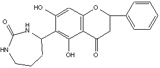 Aquiledin
– Flavonoid–alkaloids also include flavone compounds with pyrrolidine – ficin and leaves of Ficus pantoniana King (family Moraceae) and dracocephalins A–D from the herb of the rock dragonhead Dracocephalum rupestre Hance (family Lamiaceae), discovered in 2008 [Ren et al., 2008].
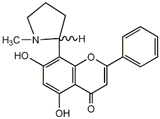 Ficin
Ficin– Another flavonoid–alkaloid is the catechin compound with furanopyridine (skitanthin) – copsirichin from the leaves of Kopsia dasyrachis Ridl. (family Apocynaceae) [Harborne, 1999]. Copsirichin has been shown to have immunomodulatory, antitumor activity in cultures of lung carcinoma cells (tyrosine kinase inhibitor IC50 = 25–160 nM), and anti-inflammatory activity.
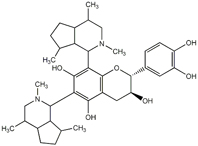 Copsirichin
– In addition to the aforementioned flavonoid aglycones with heterocyclic nitrogen-containing rings, glycosidic forms of flavonoid–alkaloids are also known, namely, catechin glycosides – with pyrrolidine – davalliosides A–C from the rhizomes of Davallia mariesii Moore (family Davalliaceae) [Harborne, 1999].
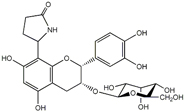 Davallioside A
The next class of “transitional” compounds is coumarinoalkaloids, for example, toddacoumalone from the roots of Toddalia asiatica (= wild orange) Toddalia asiatica (L.) Lam. (family Rutaceae). As we can see, toddacoumalone is a complex compound built on the basis of coumarin and a quinoline derivative [Ishii et al., 1991].
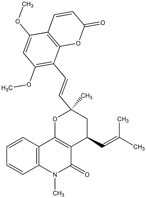 Toddacoumalone
Coumarinoflavonoids are also known today – phyllocoumarin from the cladodes of the New Zealand tree Phyllocladus trichomanoides D. Don. (family Podocarpaceae – distant relatives of European conifers, order Pinales, class Pinopsida) [Harborne, 1999].
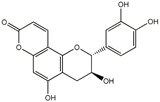 Phyllocoumarin
In the last decade, xanthochinones have also been discovered (bikaverin from the mycelium of the fungus causing wilt in plants – Fusarium oxysporum Schlecht., class Deuteromycetes, order Sphaeropsidales) [Harborne et al., 1999].
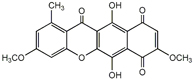 Bikaverin
Flavolignans, xantolignans, and coumarinolignans have been known for quite some time. It can be assumed that other “transitional” compounds will also be discovered in the near future.
Based on the existence of “transitional” classes, the classification of natural compounds could be presented from a dialectical perspective, taking into account the biogenetic metabolic interconnections between classes of substances, and from a prognostic point of view, suggesting the existence of undetected “transitional” classes of compounds.
The proposed general classification of natural compounds is presented in the figure. The substances in it are classified into two large groups, as is customary in other well-known classifications:
– compounds of primary biosynthesis, which are formed in plants as a result of assimilation;
– compounds of secondary biosynthesis, which are formed in plants as a result of dissimilation.
Compounds of primary biosynthesis include carbohydrates, lipids, proteins, nucleic acids, enzymes, vitamins, organic acids.
Compounds of secondary biosynthesis include terpenoids, simple phenols and their derivatives, phenylisoprenoids, polyphenols, alkaloids, thio- and cyanoglycosides, organometallic compounds.
Arrows indicate biogenetic connections, considering metabolic pathways, between classes and subclasses of compounds, and small print along the arrows indicates the so-called “transitional” classes of substances.
In this case, we propose for the first time the introduction of the classes “phenylisoprenoids” and “organometallic compounds”.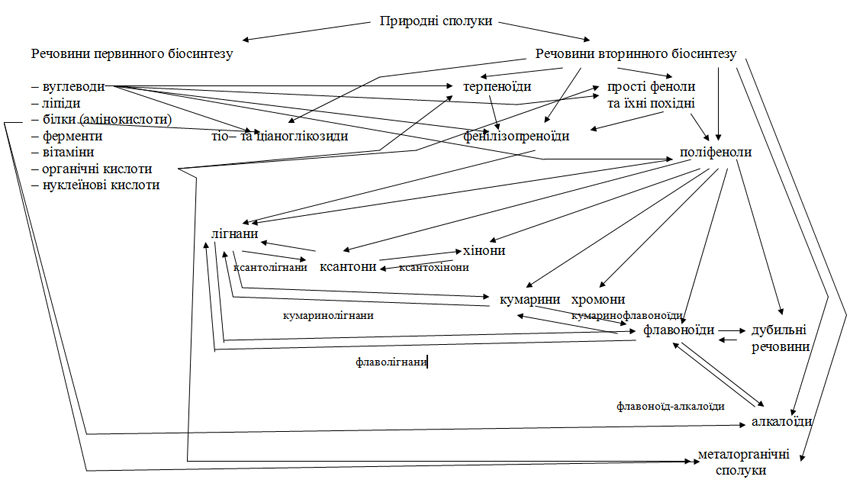
Fig. 1. General classification of natural compounds.
In addition to the proposed general classification of natural compounds, we also consider it appropriate to make certain changes in the classifications within some specific classes of substances, in particular, terpenoids, coumarins, flavonoids, alkaloids.
Thus, terpenoids can be classified into subclasses of hemi– (C5), mono– (C10), sesqui– (C15), di– (C20), sesquiterpene– (C25), tri– (C30), tetra– (C40), polyterpenoids (Cn), as is currently accepted, adding two known subclasses: C35-terpenoids and halogenated acetylene-terpenoids.
Classification of terpenoids
Terpenoids
• hemiterpenoids (C5)
• monoterpenoids (C10)
• sesquiterpenoids (C15)
• diterpenoids (C20)
• sesterterpenoids (C25)
• triterpenoids (C30)
• C35-terpenoids
• tetraterpenoids (C40)
• polyterpenoids (Cn)
• halogenated acetylene-terpenoids
Note. New subclasses proposed for inclusion in the classification are highlighted in bold.
C35-terpenoids include plagiospirolydes A and B, obtained from the herb of the liverwort Plagiochila moritziana Lindbg. & Gott. [Sp?rle et al., 1989],
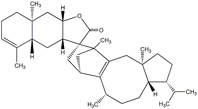 Plagiospirolyd A
as well as cryptotrione from the bark of Cryptomeria japonica (L.f.) D.Don Engl. (family Cupressaceae) [Chen et al., 2010]. For this compound, antitumor activity with an IC50 of 6.44 ± 2.23 μM has been established.
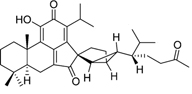 Cryptotrione
Over the past 5 years, halogenated acetylene-terpenoids have also been isolated and identified: dactyline, acetylcumazine, deacetylcumazine, which, along with
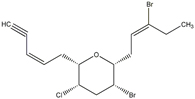 Dactyline
obtusenin, were isolated from the marine back-gilled mollusk Aplysia dactylomela Rang (= spotted sea hare), class Gastropoda, family Aplysiidae in 2007 [Derby et al., 2007].
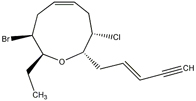 Obtusenin
Two years ago, in 2009, a halogenated acetylene-terpenoid laurencin was obtained from the thallus of the red alga Laurencia nipponica Yamada (division Rhodophyta, order Ceramiales, family Rhodomelaceae), which has a structure similar to the aforementioned dactyline and obtusenin [Suzuki et al., 2009].
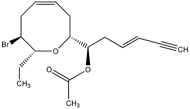 Laurencin
The isolation of terpenoid components of essential oils as separate subclasses, as is currently accepted in domestic and Russian textbooks and manuals on pharmacognosy, is considered inappropriate, since essential oils are complex mixtures of substances that may include, in addition to terpenoids, furanocoumarins, simple coumarins, quinones, simple phenols, etc., which are placed in independent classes.
It should also be noted that glycosides are already known not only for mono-, sesqui-, di-, and triterpenoids but even for hemiterpenoid glycosides, which logically fit into the subclass of hemiterpenoids (C5-terpenoids). These include, for example, (R)–3–ethyl–4–methylpentyl–beta–rutinose from the roots of Streptocaulon griffithii Hook. (family Asclepiadaceae) [Zhang et al., 2008] and others, isolated 3 years ago, in 2008.
An intermediate link between terpenoids and phenolic compounds is phenylisoprenoids.
Classification of phenylisoprenoids
Phenylisoprenoids
• phenylethanoids (salidroside);
• phenylpropanoids (including – hydroxycinnamic acids);
• phenylbutanoids;
• phenylpentanoids;
• phenylpolyisoprenoids
Currently, phenylisoprenoids are not classified as an independent class. In some publications on phytochemistry ([Kurkin, 2004] et al.), only phenylpropanoids are distinguished as a separate subclass of compounds. In scientific articles, the term phenylethanoids is encountered when referring to salidroside isolated from the rhizomes of Rhodiola rosea L. and similar compounds.
However, since at present, in addition to the aforementioned phenylethanoids and phenylpropanoids, phenylbutanoids (agrimonol from the leaves of Agrimonia pilosa Ledeb. [Harborne et al., 1999]), phenylpentanoids (ascolytotoxin from the mycelium of Ascochyta pisi Lib. var. pisi [Harborne et al., 1999]) and phenylpolyisoprenoids (ginkgol, ginkgol acid, bilobal from the fruits of Ginkgo biloba L. and the fruits of Schinus terebinthifolius Raddi [Harborne et al., 1999]) are already known, we propose to combine these subclasses into a separate class of phenylisoprenoids.
Without stopping separately on the already well-known and mentioned above phenylethanoids and phenylpropanoids (the latter should include hydroxycinnamic acids), we will focus on relatively new compounds – phenylbutanoids, phenylpentanoids, and phenylpolyisoprenoids.
The subclass of phenylbutanoids includes agrimonol, isolated in 1999 from the leaves of Agrimonia pilosa Ledeb. [Harborne et al., 1999].
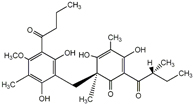 Agrimonol
The phenylpentanoids include ascolytotoxin from the mycelium of the pea ascochyta fungus – Ascochyta pisi var. pisi (class Deuteromycetes, order Sphaeropsidales, family Sphaeropsidaceae) [Harborne et al., 1999].
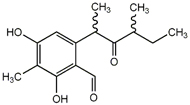 Ascolytotoxin
Very interesting compounds are also phenylpolyisoprenoids, isolated from the fruits of Ginkgo biloba L. and the fruits of Schinus terebinthifolius Raddi (Anacardiaceae) [Harborne et al., 1999], – ginkgol, ginkgol acid, bilobal, and others. These compounds are responsible for the allergic reactions of ginkgo and have a toxic effect in experiments on chicken embryos at concentrations greater than 0.0005% (LD50 equals 1.8 mg/egg, concentration in extract 0.0033%).
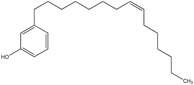 Ginkgol
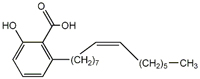 Ginkgol acid
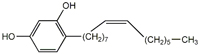 Bilobal
Biogenetically, among phenols, the compounds closest to terpenoids are lignans – derivatives of diphenylpropane.
The class “Simple phenols and their derivatives,” as is currently accepted, includes phenols, phenolic aldehydes, phenolic ketones, phenolic alcohols, phenolic acids, glycosides of simple phenols (this class of compounds has not undergone significant changes in the last decade).
The large class “Polyphenols” can be represented as follows: subclasses “Lignans,” “Coumarins,” “Chromones,” “Xanthones,” “Quinones,” “Flavonoids,” “Tannins.” Between subclasses, “transitional subclasses” can logically be placed, as mentioned above (xanthochinones, coumarinoflavonoids, coumarinolignans, xantolignans, flavolignans).
Based on the recently identified compounds, we propose to make changes to the classification of coumarins and flavonoids.
In particular, the classification of coumarins could be represented as follows.
Classification of coumarins
Coumarins
• simple and simple substituted coumarins;
• furanocoumarins (= furano-coumarins);
• pyranocoumarins;
• benzocoumarins;
• coumestrols;
• dimeric and condensed coumarins;
• isocoumarins
Note. New subclasses proposed for inclusion in the classification are highlighted in bold.
We propose to add a new subclass “Isocoumarins” to the class “Coumarins”.
Representatives of isocoumarins include melein, 4-hydroxymelein, 6-hydroxymelein, and others, isolated from the wood ants of the genus Camponotus Mayr (family Formicidae) in 2008–2009 [Higgins et al., 2009; Voegtle et al., 2008];
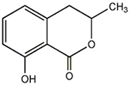 Melein
as well as polygonolid from the herb of Polygonum hydropiper L. (1999) [Harborne et al., 1999].
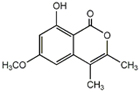 Polygonolid
 A new subclass – flavonoid–alkaloids should also be added to the class of flavonoids; their formulas were provided above.
The subclass of flavonoid–alkaloids should biogenetically precede the class “Alkaloids”.
Classification of alkaloids
Alkaloids
• true
• protoalkaloids (exocyclic)
• pseudoalkaloids (isoprenoid):
– monoterpenoid,
– sesquiterpenoid,
– diterpenoid,
– triterpenoid (steroidal)
As we can see, the general classification of alkaloids developed by A.P. Orekhov in 1938 remains unchanged and contains three major groups of alkaloids (true; exocyclic, or protoalkaloids, and isoprenoid, or pseudoalkaloids).
Based on modern data on the study of alkaloid-bearing plants, the class “Alkaloids” should be supplemented with eight new subclasses (Fig.2).
Alkaloids
– true
– protoalkaloids (exocyclic)
– pseudoalkaloids (isoprenoid): monoterpenoid, sesquiterpenoid, diterpenoid, triterpenoid (steroidal)
True alkaloids
– pyrrolidine
– pyrrolizidine
– tropane
– piperidine
– pyridine
– quinolizidine
– quinoline
– isoquinoline
– indolizidine
– indole
– purine
– imidazole
– acridine
– alkaloids with azepine cycle
– alkaloids with eight-membered cycle
– pyrrole
– naphthyridine
– oxazoles
– peptide
– pyrazole
– quinolizidine
Fig.2. Classification of alkaloids.
Note. New subclasses proposed for inclusion in the classification are highlighted in bold.
In Fig.2, the classification of true alkaloids is presented according to Evans (2002) and Hansel (1999), and the subclasses highlighted in bold are proposed to be added to their classifications.
1. Thus, the alkaloids with an azepine (7-membered) cycle include balanol, isolated from the fruits of the acorn fungus Verticillium balanoides (Drechsler) Dowsett, J. Reid et Hopkin (class Sordariomycetes, family Plectosphaerellaceae) and Cordyceps ophioglossoides (Ehrh.) Link (class Ascomycetes, order Hypocreales, family Clavicipitaceae) in 2001 [Masse, Morgan, Panek, 2001; Riber, Hazell, Skrydstrup, 2001] (both – division Ascomycetes),
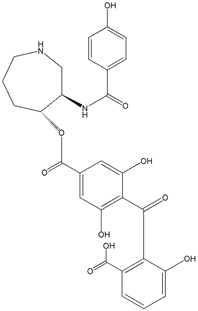 (–)–Balanol
The second alkaloid with an azepine cycle is drupacin from the fruits of Cephalotaxus fortunei Hook. (family Cephalotaxaceae) and Psoralea drupacea Bge in 2003 [Ye, Wu, 2003].
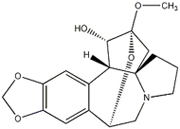 Drupacin
2. Alkaloids with an eight-membered cycle are represented by ircinols A and B, isolated from marine sponges of the genus Amphimedon – organisms that appeared on planet Earth more than 600 million years ago and are not fully-fledged multicellular animals (phylum Porifera, class Demospongiae, family Niphatidae) in 1994 [Tsuda et al., 1994].
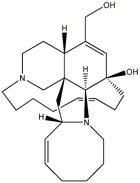 Ircinol B
Another alkaloid with an eight-membered cycle is homalin, obtained from the leaves of the Philippine tree Homalium pronyense Guillaumin (family Flacourtiaceae) in 1999 [Harborne et al., 1999].
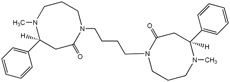 Homalin
3. Among pyrrole alkaloids is magnolamide, isolated from the leaves of Magnolia coco (Lour.) DC. in 1998 [Yu, Chen, Shieh, 1998].
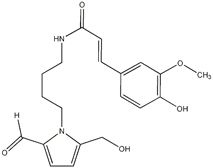 Magnolamide
4. The next subclass of alkaloids that we propose to add to their classification is naphthyridine alkaloids, in particular, acanthicypholine from the leaves of Acanthus ilicifolius L. (family Acanthaceae), isolated in 1999 [Harborne et al., 1999].
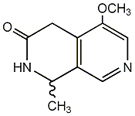 Acanthicypholine
5. Annuloline from the roots of Lolium multiflorum Lam. (family Poaceae) [Harborne et al., 1999] belongs to the oxazole alkaloids – the 5th new subclass of true alkaloids.
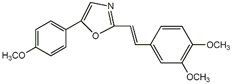 Annuloline
6. The sixth new subclass of true alkaloids is peptide alkaloids – zizyphins A–F from the bark of Zizyphus jujuba Mill. (Rhamnaceae), identified in 2001 [Tripathi et al., 2001]
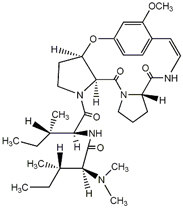 Zizyphin A
and aralionins A and B from the bark and leaves of Araliorhamnus vaginata H. Perrier. (Rhamnaceae), known since 1999 [Harborne et al., 1999].
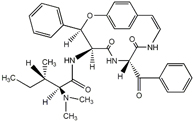 Aralionin A
7. Another new subclass of alkaloids is pyrazole alkaloids – vitasomnin, isolated from the roots of the Ayurvedic plant Withania somnifera Dunal (family Solanaceae) in 1999 [Harborne et al., 1999].
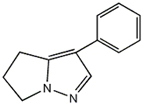 Vitasomnin
8. Finally, the eighth new subclass of true alkaloids that we propose to include in the classification is quinolizidine alkaloids – dioscorin from the roots of various species of Dioscorea, namely, Dioscorea hirsuta M. Martens & Galeotti, D. batatas Decne, D. hispida Dennst., isolated in 1999 [Harborne et al., 1999].
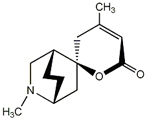 Dioscorin
 In the classification of secondary biosynthesis substances, organometallic compounds deserve special mention.
In particular, they include organosilicon compounds, first isolated from plant raw materials in 2009 – monomethylsilantriol CH3(SiOH)3 and other silanes (herb of Equisetum arvense L. and other species of the genus Equisetum, rhizomes of Calla palustris L. (family Araceae) [Currie, Perry, 2009]),
as well as compounds containing arsenic (arsenobetaine, isolated from the fruiting bodies of Sparassis crispa (Wulfen) Fr. (division Basidiomycota, class Agaricomycetes, family Sparassidaceae), reported in the scientific literature since 2008 [Rezanka, Siglera, 2008]).
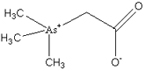 Arsenobetaine
 Thus, based on the wide variety of new natural compounds discovered to date, objective methodological and methodological prerequisites have emerged for revising the existing classification of natural compounds.
We propose our newly developed dialectical and prognostic classification, which takes into account the current global level of development in phytochemistry and will encompass a significant variety of natural compounds, show their biogenetic connections, expand the boundaries of understanding of BAS classes, and predict new, yet undiscovered classes of BAS.
There is no doubt that today the clear boundaries between BAS classes are being erased, and many “transitional” classes of compounds have been identified.
Just as the periodic table allows predicting new undiscovered elements, the proposed biogenetic and prognostic classification allows for the discussion of the existence of new classes of natural compounds.
Thus, based on the classification we proposed, the existence of such new, undiscovered “transitional” classes of compounds can be predicted, such as:
• coumarinoquinones;
• quinonolignans;
• chromonolignans;
• chromonquinones;
• xantocoumarins;
• xantochromones;
• chromonoflavonoids.
Thus, together we can take a glimpse into the future of phytochemistry.
Literature
1. Kovalov V.M., Pavliy O.I., Isakova T.I. Pharmacognosy with the basics of plant biochemistry / ed. by Prof. V.M. Kovalov. – Kharkiv: Prapor, 2000. – 704 p.
2. Kurkin V.A. Pharmacognosy: A textbook for students of pharmaceutical universities. – Samara: LLC “Ofort” SamGMU, 2004. – 1180 p.
3. Muravyeva D.A., Samilina I.A., Yakovlev G.P. Pharmacognosy: A textbook. – 4th ed., revised and expanded. – M.: Medicina, 2002. – 656 p.
4. Barrett M.L., Scutt A.M., Evans F.J. Cannflavin A and B, prenylated flavones from Cannabis sativa L. // Experientia. – 1986. – Vol.42, No. 4. – P.452–453.
5. Chen Ch.-Ch., Wu J.-H., Yang N.-S., Chang J.-Y., Kuo Ch.-Ch., Wang Sh.-Y., Kuo Y.-H. Cytotoxic C35 terpenoid cryptotrione from the bark of Cryptomeria japonica // Organic Letters. – 2010. – Vol. 12, No. 12. – P.2786–2789.
6. Chen S.B., Gao G.Y., Leung H.W. et al. Aquiledine and isoaquiledine, novel flavonoid alkaloids from Aquilegia ecalcarata // J. Nat. Prod. – 2001. – Vol.64, N 1. – P.85–87.
7. Currie H.A., Perry C.C. Chemical evidence for intrinsic ‘Si’ within Equisetum cell walls // Phytochemistry. – 2009. – Vol.70, No. 17-18. – P.2089–2095.
8. Derby C.D., Kicklighter C.E., Johnson P.M., Zhang X. Chemical composition of inks of diverse marine molluscs suggests convergent chemical defenses // J. Chem. Ecol. – 2007. – Vol.33, No. 5. – P.1105–1113.
9. Evans W.C. Trease and Evans’ Pharmacognosy. – 15th Edition. – 2002. –London: Saunders Ltd. – 616 p.
10. Fukai T., Nomura T. Isoprenoid–substituted flavonoids from roots of Glycyrrhiza inflata // Phytochem. – 1995. – Vol.38, N 3. – P.759–765.
11. Hansel R., Sticher O., Steinegger E. Pharmacognosy, Phytopharmacy. – Berlin, Heidelberg: Springer–Verlag, 1999. – 1403 p.
12. Harborne J.B. The Handbook of Natural Flavonoids. – Vol.2. Flavans and proanthocyanidins. – London: Taylor & Francis Ltd, 1999. – 355 p.
13. Harborne J.B., Baxter H., Moss G.P. Phytochemical dictionary: a handbook of bioactive compounds from plants. Second Edition. – London: Taylor & Francis Ltd, 1999. – 961 p.
14. Higgins C.A., Delbederi Z., McGarel K. et al. Synthesis and in vitro and in vivo evaluation of a series of dihydroisocoumarin derivatives conjugated with fatty acids, alcohols, and amines as potential anticancer agents // Bioconjug. Chem. – 2009. – Vol. 20, N 9. – P.1737–1751.
15. Ishii H., Kobayashi J.I., Ishikawa T. Toddacoumalone a novel mixed dimer of coumarin and quinolone from Toddalia asiatica L. Lam. and Toddalia aculeata Pers. // Tetrahedron Letters. – 1991. – Vol.32. – P.6907–6910.
16. Johns S.R., Russel J.H. Ficine, a novel flavonoidal alkaloid from Ficus pantoniana // Tetrahedron Lett. – 1965. – Vol.24. – P.1987–1991.
17. Karrer W. Die Konstitution und Vorkommen der organishen Pflanzenstaffe. – Basel-Stuttgart, 1958.– 1120 p.
18. Lee S.–J., Wood A.R., Maier C.G.–A. et al. Prenylated flavonoids from Maclura pomifera // Phytochemistry. – 1998. – Vol.49, N 8. – P. 2573–2577.
19. Masse C.E., Morgan A.J., Panek J.S. An asymmetric aminohydroxylation approach to the azepine core of (–)–balanol // Org. Lett. – 2000. – Vol.2, № 17. – P.2571–2573.
20. Milligan S.R., Kalita J.C., Pocock V. et al. The endocrine activities of 8–prenylnaringenin and related hop (Humulus lupulus L.) flavonoids // J. Clin. Endocrinol. Metab. – 2000. – Vol.85, N 12. – P.4912–4915.
21. Ren D.M., Guo H.F., Yu W.T. et al. Stereochemistry of flavonoidal alkaloids from Dracocephalum rupestre // Phytochemistry. – 2008. – Vol.69, № 6. – P. 1425–1433.
22. Rezanka T., Siglera K. Biologically active compounds of semi–metals // Phytochemistry. – 2008. – Vol.69, Issue 3. – P.585–606.
23. Riber D., Hazell R., Skrydstrup T. Studies on the SmI2–promoted pinacol–type cyclization: synthesis of the hexahydroazepine ring of balanol // J. Org. Chem. – 2000. – Vol.65, № 17. – P.5382–5390.
24. Sp?rle J., Becker H., Gupta M.P., Veith M., Huch V. Novel C–35 terpenoids from the Panamanian liverwort Plagiochila moritziana // Tetrahedron. – 1989. – Vol.45, Issue 16. – P.5003–5014.
25. Suzuki M., Takahashi Y., Nakano S. et al. An experimental approach to study the biosynthesis of brominated metabolites by the red algal genus Laurencia // Phytochemistry. – 2009. – Vol.70, № 11–12. – P.1410–1415.
26. Tripathi M., Pandey M.B., Jha R.N., Pandey V.B., Tripathi P.N., Singh J.P. Cyclopeptide alkaloids from Zizyphus jujuba // Fitoterapia. – 2001. – Vol.72, N 5. – P.507–510.
27. Tsuda M., Kawasaki N., Kobayashi J. Ircinols A and B, first antipodes of manzamine-related alkaloids from an Okinawan marine sponge // Tetrahedron. – 1994. – Vol. 50, Issue 27. – P.7957–7960.
28. Vanhoenacker G., Van Rompaey P., De Keukeleire D., Sandra P. Chemotaxonomic features associated with flavonoids of cannabinoid–free cannabis (Cannabis sativa subsp. sativa L.) in relation to hops (Humulus lupulus L.) // Nat. Prod. Lett. – 2002. – Vol.16, № 1. – P.57–63.
29. Voegtle H.L., Jones T.H., Davidson D.W., Snelling R.R. E–2–ethylhexenal, E–2–ethyl–2–hexenol, mellein, and 4–hydroxymellein in Camponotus species from Brunei // J. Chem. Ecol. – 2008. – Vol.34, N 2. – P.215–219.
30. Yano K., Ishizu T. Capillen, a seed germination inhibitor from Artemisia capillaris roots // Phytochemistry. – 1994. – Vol.37. – P.689–690.
31. Ye X.R., Wu K.M. [Synthesis and antitumor activity of the derivatives of cephalotaxine and drupacine] // Yao Xue Xue Bao. – 2003. – Vol.38, № 12. – P.919–923.
32. Yu H.J., Chen C.C., Shieh B.J. Two new constituents from the leaves of Magnolia coco // J. Nat. Prod. – 1998. – Vol.61, № 8. – P.1017–1019.
33. Zhang X.H., Zhou T., Xuan L.J. A dipeptide and two glycosides from Streptocaulon griffithii // J. Asian Nat. Prod. Res. – 2008. – Vol.10, N 9–10. – P.891–896.