Soybeans and Legumes Against Dementia, Hair Loss, and Osteoporosis
Soy, Beans, and Peas against Dementia, Baldness, and Osteoporosis
Recently, a lot of information has appeared about the beneficial effects of female sex hormones, estrogens, on the skin, hair, and the body as a whole. It has been established that estrogens prevent the development of cardiovascular diseases, osteoporosis, and even Alzheimer’s disease (read more about the role of estrogens here).
A rather lively discussion is being held about the role of phytoestrogens – substances that can behave like estrogens in the human body, although they differ greatly from the latter in structure. Currently, several classes of natural substances – phytoestrogens – are known. Chemically, they are not steroid hormones (unlike true estrogens), but in the human body, they can exert both estrogenic and antiestrogenic effects. For example, unlike true estrogens, phytoestrogens do not stimulate but inhibit the growth of hormone-dependent tumors, as evidenced by both epidemiological data and the results of experiments on mice and cell lines.
Phytoestrogens are often called phenolic estrogens because they belong to the polyphenols. The main phytoestrogens are isoflavones (genistein, daidzein), coumestans (coumestrol), and pterocarpans (phaseollin, pisatin, hydroxypisatin).
Main Phytoestrogens
Isoflavones
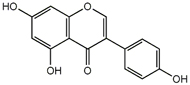
Genistein
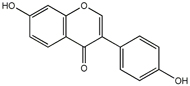
Daidzein
Pterocarpans
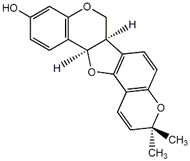
Phaseollin
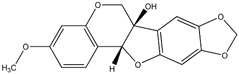
Pisatin
“True” Estrogens
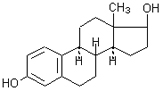
Estradiol
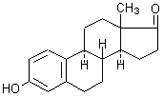
Estrone
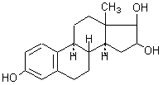
Estriol
To date, the phytoestrogens of soy are the most studied, although all legumes (beans, peas, broad beans, alfalfa, clover, vetch, etc.) contain estrogen-like compounds. The main phytoestrogens in soy are the isoflavones genistein and daidzein; in beans, the prenylated isoflavone kievitone and the pterocarpan phaseollin; in peas, the isoflavones formononetin and afrormosin, and the pterocarpans pisatin and hydroxypisatin.
Phytoestrogens can be present in plants both in the form of aglycones and glycosides. In the human intestine, glycosides are hydrolyzed by the action of intestinal microflora and converted into aglycones. As it turned out, glycosides are practically unable to induce an estrogenic response in cells.
A classic example of the hormonal influence of phytoestrogens on mammals was the “clover disease” described by American scientists – infertility in sheep caused by isoflavones contained in clover. Apparently, these reproductive disorders in sheep are explained by the extremely high doses of isoflavones consumed (the sheep grazed on clover meadows). To date, no reliable data have been obtained indicating a noticeable effect of consuming legumes (soy products, beans, peas, broad beans) on the reproductive system of healthy women of reproductive age.
Several questions are widely discussed in scientific circles regarding phytoestrogens:
1. Are phytoestrogens an alternative to hormone replacement therapy in postmenopause?
It is known that with the onset of the climacteric period, the ovaries stop producing estrogens, which leads to a number of negative consequences – changes in thermoregulation (“hot flashes”, increased night sweats), significant loss of bone tissue (up to 15%), and an increased risk of cardiovascular diseases. Women taking estrogen preparations after menopause have a reduced risk of cardiovascular disease, osteoporosis, and discomfort associated with “hot flashes”. However, because estrogen therapy is associated with side effects and increases the risk of breast cancer, it is often not used long enough to achieve a significant effect.
Medical observations show that Japanese women suffer 60–70% less from symptoms characteristic of menopausal syndrome compared to Americans. In the Japanese language, there isn’t even a word to describe “hot flashes”. Osteoporosis is a major problem for older women, often bringing pain and suffering. Observations of 267 elderly Japanese-American women (aged 65–93) showed that those who regularly consumed soy products had the highest bone density (hip and vertebrae).
Japanese scientists conducted a study on 11-week-old rats with ovaries removed. For 4 weeks, their feed was enriched with isoflavones – genistein and daidzein. Results showed that genistein and daidzein participate in building strong bones just like estrogens do. Additionally, they prevented the development of abdominal obesity and high cholesterol. While scientists refrain from a final answer on whether soy products are a full alternative to HRT, it is evident that consuming legumes provides some of the positive effects possessed by “true” estrogens.
2. If legumes are “female” products, can they turn a man into a woman?
There is an opinion that products rich in phytoestrogens can lead to decreased potency. Currently, it is established that in men, isoflavones block the enzyme 5-alpha reductase, which is responsible for converting testosterone into dihydrotestosterone (DHT). DHT is the most active androgen, determining secondary male sexual characteristics. However, the increased formation of DHT in prostate tissue is linked to prostate hypertrophy, hyperplasia, adenoma, and potentially cancer. Thus, reducing DHT levels with isoflavones prevents prostate diseases.
Therefore, men should not fear consuming legumes – phytoestrogens do not affect testosterone levels (they only slightly reduce the amount of DHT formed from it). Furthermore, it is well known that Chinese men, who consume significant amounts of soy products from childhood, do not suffer from sexual dysfunction.
Good news for men: isoflavones also fight baldness. As mentioned, isoflavones lower DHT concentration. An excess of this hormone causes progressive atrophy of hair follicles (specifically DHT-sensitive ones), leading to hair thinning and “male pattern baldness”. High DHT also plays a role in oily seborrhea and acne. Since phytoestrogens lack hormonal side effects, they can be successfully used in treating androgenic alopecia, acne, and oily seborrhea.
3. What is the impact of phytoestrogens on the brain and nervous system?
Numerous studies have proven that genistein and daidzein can facilitate chemical processes in the brain. In experiments on young rats, isoflavones improved brain biochemistry and memory. Scientists from the University of Alabama presented results of three-year experiments on 45 aging female monkeys, proving that soy isoflavones slow down brain degeneration similar to Alzheimer’s disease.
Alzheimer’s is the most common neurodegenerative disease in the elderly, leading to impaired intelligence and memory. Researchers in Sweden (Department of Clinical and Experimental Medicine) studied genistein’s (10 mg/kg) effect on learning. Results showed that genistein improves short-term spatial memory in rats by regulating estrogen metabolism while reducing oxidative stress.
However, an opposing view exists. A study by Dr. Lon White (White et al., 1996; University of Hawaii) on over 3,000 Japanese-American men in Hawaii suggested that those who ate tofu at least twice a week in mid-life were more likely to show signs of dementia later. These results caused a sensation in the late 90s. However, today it is argued that these conclusions were premature. Comments (e.g., McLachlan et al., 1996) pointed to extremely high concentrations of aluminum in Hawaii’s drinking water (0.75 mg/L vs. the norm of 0.05–0.1 mg/L), a known risk factor for Alzheimer’s. Japanese people living in Hawaii suffer from Alzheimer’s more often than those living in Japan.
In conclusion, soy, beans, and peas are beneficial for both women and men, helping to avoid Alzheimer’s, osteoporosis, and baldness. Another issue is that much of the soy sold today is transgenic, and the long-term consequences are difficult to calculate. But that is a topic for a separate article…
References
- 1. Anthony M.S., et al. Effects of soy isoflavones on atherosclerosis… // Am. J. Clin. Nutr. – 1998.
- 2. Bagheri M., et al. Genistein ameliorates learning and memory deficits… // Neurobiol. Learn Mem. – 2011.
- 3. Boue S.M., et al. Estrogenic and antiestrogenic activities of phytoalexins… // J. Agric. Food Chem. – 2011.
- 4. Ding B.J., et al. Soybean isoflavone alleviates beta–amyloid 1–42 induced inflammatory response… // Int. J. Dev. Neurosci. – 2011.
- 5. Hsieh H.M., et al. Soy isoflavones attenuate oxidative stress… // Food Chem. Toxicol. – 2009.
- 6. Jefremov V., et al. 17beta–Oestradiol stimulation of G–proteins… // J. Neuroendocrinol. – 2008.
- 7. Kim H., et al. Mechanisms of action of the soy isoflavone genistein… // Am. J. Clin. Nutr. – 1998.
- 8. Matscheski A., et al. Effects of phytoestrogen extracts isolated from rye, green and yellow pea seeds… // Horm. Res. – 2006.
- 9. McLachlan D.R., et al. Risk for neuropathologically confirmed Alzheimer’s disease and residual aluminum… // Neurology. – 1996.
- 10. White L., et al. Prevalence of dementia in older Japanese-American men in Hawaii // JAMA. – 1996.