Grapefruit: A Danger for Women?
Estrogens and breast cancer? Weight loss?
In a study of the health status of more than 50,000 postmenopausal women from five ethnic groups, it was found that women who consumed a quarter of a grapefruit per day developed breast cancer one-third more often compared to non-grapefruit lovers.
The researchers linked this data to the influence of flavanones naringin, naringenin, and the furanocoumarin bergamottin on estrogen metabolism (its disruption is directly related to female oncology).
The flavanones naringenin, its disaccharide naringin (7-O-neohesperidoside = 7-O-[alpha-L-rhamnosyl-(1→2)-beta-D-glucoside] of naringenin; this is what gives grapefruit its bitter taste – its bitterness index = 1/5 of quinine’s bitterness) and the furanocoumarin bergamottin inactivate one of the isoforms of cytochrome P450 (CYP3A4) in the liver, therefore compounds whose metabolism is associated with this cytochrome cannot break down, convert into other substances, etc. Thus, their concentration in plasma inevitably increases.
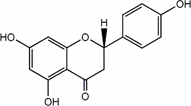
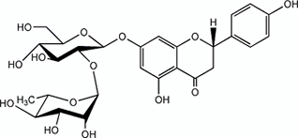
Naringenin Naringin
This is exactly what happens with female sex hormones estrogens (cytochrome P450, form CYP3A4, is involved in the metabolism of estrogens in the liver) – they cannot be metabolized into less active derivatives and breakdown products, therefore they accumulate in plasma.
Moreover, this is characteristic of a whole range of medications whose metabolism in the liver is associated with cytochrome P450, isoform CYP3A4 ( list): they do not break down, and thus are not excreted from the body, circulating with the blood flow, resulting in an overdose effect.
More…
When cytochrome P450 (CYP3A4) is blocked, the incoming drugs are not metabolized in the liver, but circulate throughout the body, their concentration in the blood increases and reaches a dangerous level, at which all side effects manifest simultaneously. For example, during a study of the interaction of one antihypertensive drug with grapefruit juice, scientists found an increase in the concentration of the drug in the blood by up to 230%!
– anxiolytics: alprazolam, buspirone, midazolam, triazolam;
– antiarrhythmics: amiodarone, quinidine;
– antibiotics: clarithromycin, erythromycin, troleandomycin;
– antihistamines: fexofenadine;
– anticoagulants: warfarin;
– antiepileptics: carbamazepine;
– beta-blockers: carvedilol;
– calcium channel blockers: diltiazem, felodipine, nicardipine, nifedipine, nimodipine, nisoldipine, verapamil;
– hormonal medications containing: cortisol, estradiol, methylprednisolone, progesterone, testosterone;
– immunosuppressants: cyclosporine, sirolimus, tacrolimus;
– hypolipidemics: atorvastatin, fluvastatin, lovastatin, simvastatin;
– antidepressants: sertraline, fluvoxamine; xanthines; theophylline;
– drug for treating benign prostatic hyperplasia: finasteride;
– opioid analgesics: alfentanil, fentanyl, sufentanil;
– antivirals: amprenavir, indinavir, nelfinavir, ritonavir, saquinavir;
– anthelmintics: albendazole;
– antifungals: itraconazole;
– antitussives: dextromethorphan;
– antitumor agents: cyclophosphamide, etoposide, ifosfamide, tamoxifen, vinblastine, vincristine;
– repotenters: sildenafil, tadalafil.
* Here are listed active substances, the trade names of the drugs can vary widely. The name of the active substance is indicated on the packaging and in the instructions for the medication.
The naringin itself also has a direct influence on the weight loss process, as it has a choleretic effect, thus improving the fat breakdown process.
Naringin is found in the translucent interlobular septa of the grapefruit fruit and in its lower (white) part of the peel.
1 grapefruit that you can buy in our (European) stores contains about 30 mg of naringin.
The content of naringin in freshly squeezed grapefruit juice ranges from 115 to 384 mg/l (data from British scientists), in industrial juices – up to 887 mg/ml (data from American scientists); naringenin – about 2 mg/l; bergamottin – less than 0.5 mg/l (bergamottin does not play a significant role in the effects of grapefruit juice).
When ingested, the glycoside naringin is broken down into naringenin and sugars – rhamnose and glucose.
When consuming grapefruit juice (with a naringin concentration of 887 mg/ml), the concentration in plasma (Cmax) of the estrogen 17 alpha-ethinylestradiol significantly increases – by an average of 137% (from 64% to 214%). This shows that grapefruit juice significantly increases the bioavailability of 17 alpha-ethinylestradiol. A possible explanation may be that grapefruit juice suppresses the metabolic degradation of this estrogen.
Similar data have been obtained for another estrogen – 17 beta-estradiol (inhibition of its conversions to ( estrone ) and ( estriol ) has been established).
More about the role of estrogens in the female body, their pros and cons can be read here…, and the formulas of the main estrogens and phytoestrogens can be found here…
However, the estrogen metabolism in the female body is influenced not so much by grapefruit as by liver health. In the studies mentioned at the beginning, such risk factors as possible high insolation (Los Angeles, Hawaiian Islands), absence or presence of childbirth, abortions, gynecological diseases, etc. were not taken into account. It should also be noted that the conclusion of American scientists regarding the influence of grapefruit on the development of breast cancer concerned women who were in postmenopause.
At the same time, scientists from the University of Oxford (UK) (Spencer E.A., Key T.J., Appleby P.N., van Gils C.H., Olsen A., Tjоnneland A., Clavel-Chapelon F., Boutron-Ruault M.C., Touillaud M., Sаnchez M.J., Bingham S., Khaw K.T., Slimani N., Kaaks R., Riboli E. (2009)), who studied the effect of grapefruit consumption over 9.5 years on the occurrence of breast cancer in 114,504 women of different age groups (59% of whom occasionally consumed grapefruits, 4% – more than 60 g per day, the rest did not eat grapefruits), found no evidence of a link between grapefruit consumption and an increased risk of breast cancer in women, both in premenopause and postmenopause, and in postmenopause with hormone replacement therapy.
From all of the above, the following conclusion can be drawn: since the inhibitory effect of naringenin and naringin on the activity of cytochrome P450 (isoform CYP3A4) in the liver is reliably established, and estrogen metabolism is inextricably linked to this isoform of cytochrome, it can be concluded that the established influence on the occurrence of breast cancer is exerted by grapefruits with a high content of naringin and naringenin (even according to various scientists, the content of these flavanones in fruits of different varieties and populations of grapefruit varies significantly: from 115 to 887 mg/ml!), particularly fruits grown in high insolation conditions (USA, California; Hawaiian Islands).
That is, when buying grapefruits, pay attention to where they were grown. It is better to buy fruits imported from countries with a subtropical climate (not too hot), for example, from the Mediterranean, Black Sea coast of the Caucasus. In such fruits, the content of naringin and naringenin is low, and the risk of breast cancer when consuming them is small.
Monroe K.R., Murphy S.P., Kolonel L.N., Pike M.C. Prospective study of grapefruit intake and risk of breast cancer in postmenopausal women: the Multiethnic Cohort Study // Br. J. Cancer. – 2007. – Vol.97, № 3. – P.440-445.
Schubert W., Eriksson U., Edgar B., Cullberg G., Hedner T. Flavonoids in grapefruit juice inhibit the in vitro hepatic metabolism of 17 beta-estradiol // Eur. J. Drug Metab. Pharmacokinet. – 1995. – Vol.20, № 3. – P.219-224.
Spencer E.A., Key T.J., Appleby P.N., van Gils C.H., Olsen A., Tjоnneland A., Clavel-Chapelon F., Boutron-Ruault M.C., Touillaud M., S?nchez M.J., Bingham S., Khaw K.T., Slimani N., Kaaks R., Riboli E. Prospective study of the association between grapefruit intake and risk of breast cancer in the European Prospective Investigation into Cancer and Nutrition (EPIC) // Cancer Causes Control. – 2009. – Vol.20, № 6. – P.803-809.
Weber A., Jоger R., Bаrner A., Klinger G., Vollanth R., Matthey K., Balogh A. Can grapefruit juice influence ethinylestradiol bioavailability? // Contraception. – 1996. – Vol.53, № 1. – P.41-47.