How to remember the formulas of polysaccharides
Rule Zero: Let your brain be the hero.
(Wisdom from the vintage “Advisor” computer program)
How to remember the formulas of polysaccharides?
Experience in teaching pharmacognosy shows that the main hurdle in memorizing the structures of mono- and polysaccharides is distinguishing between the alpha and beta forms of sugars. Most students know they exist, but the challenge is identifying the difference at a glance.
The Secret of the First Carbon
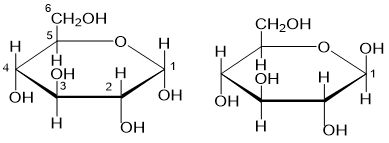
The difference between alpha and beta-forms of all sugars, without exception, lies in the position of the –OH (hydroxyl) group at the first carbon atom of the heterocyclic ring (the C1 atom, also known as the asymmetric or anomeric carbon).
The Golden Rule:
In the alpha-form, the –OH group is always located below the ring.
In the beta-form, it is always located above.
In the beta-form, it is always located above.
The “Foundation” Mnemonic
To ensure this truth is forever lodged in your mind, follow this visual logic:
1. Clockwise Counting: Remember that the counting of carbon atoms in the heterocyclic ring always proceeds clockwise. The first carbon (C1) is always the one immediately to the right of the oxygen atom (the heteroatom). It is the atom “farthest to the right” in standard projections.
2. The Support System: If we look closely at these heterocyclic rings, we can imagine them resting on the ground.
– Alpha: When the –OH group stands firmly on the ground (the base or foundation), we associate it with the first letter of the alphabet. Think: Alpha = At the base.
– Beta: When the group rises upward (as if ascending a step or a “pole”), we associate it with the second letter. Think: Beta = Beyond or Bringing it up.
1. Clockwise Counting: Remember that the counting of carbon atoms in the heterocyclic ring always proceeds clockwise. The first carbon (C1) is always the one immediately to the right of the oxygen atom (the heteroatom). It is the atom “farthest to the right” in standard projections.
2. The Support System: If we look closely at these heterocyclic rings, we can imagine them resting on the ground.
– Alpha: When the –OH group stands firmly on the ground (the base or foundation), we associate it with the first letter of the alphabet. Think: Alpha = At the base.
– Beta: When the group rises upward (as if ascending a step or a “pole”), we associate it with the second letter. Think: Beta = Beyond or Bringing it up.
Constructing Polysaccharide Molecules
When building polysaccharide chains, you can simplify your memory by noting that almost all major polysaccharides in pharmacognosy are built from alpha-form residues:
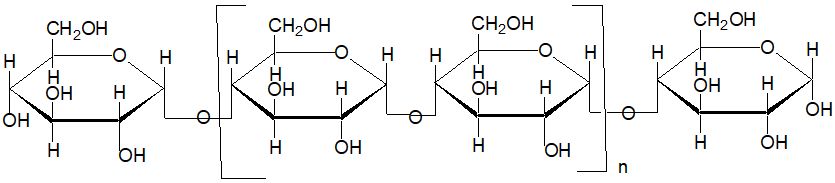
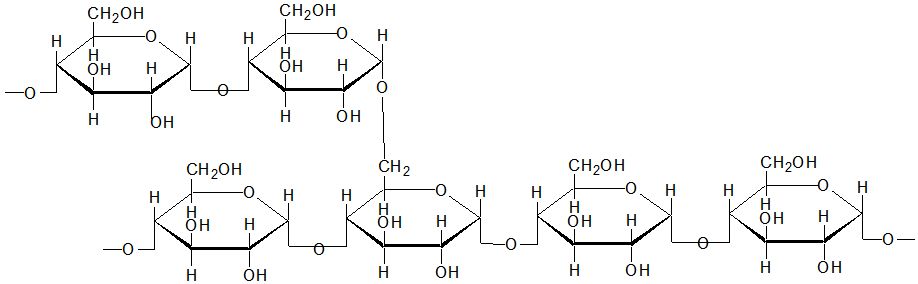
– Starch (Amylose and Amylopectin): Pure chains of alpha-D-glucose residues.
– Pectin: Chains of alpha-D-galacturonic acid residues.
– Starch (Amylose and Amylopectin): Pure chains of alpha-D-glucose residues.
– Pectin: Chains of alpha-D-galacturonic acid residues.
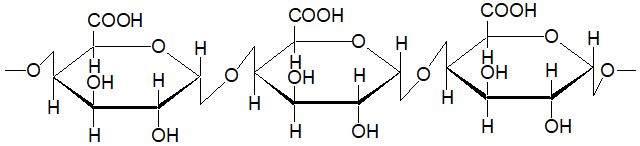
The Notable Exception:
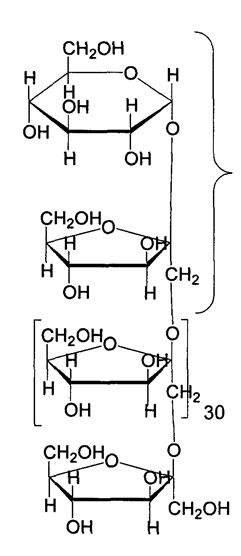
– Inulin: This is a unique case. Apart from a single “starter” residue of alpha-glucose at the top, it consists of approximately 30 residues of beta-fructose.