Antioxidants. Searching for the truth
Antioxidants. Searching for the truth
Much has been said and written about antioxidants; the concept is extremely popular and seems to be on everyone’s lips. We are constantly urged to take antioxidants to prevent oxidative stress, which is associated with a huge number of diseases, ranging from arthritis, asthma, and diabetes to Parkinson’s and Alzheimer’s diseases and cancer. And what will we get as a result? Of course, we would all like to live to be 300 years old without experiencing old age and disease. But can antioxidants help us achieve this?
It is worth noting that the human body is a fairly balanced, self-regulating system that is highly adaptable and interconnected. It is known that with the intensification of lipid peroxidation (LPO), which is considered one of the most dangerous consequences of the “oxidative attack” of active free radical forms of oxygen, cell membranes undergo adaptive restructuring: phospholipids, which are more difficult to oxidize, begin to predominate in them, and membrane homeostasis is maintained. Further research by O.B. Burlakova et al. (1982–1985) showed that with prolonged administration of antioxidants (alpha-tocopherol), a reverse adaptive restructuring of cell membranes is observed, i.e., the number of phospholipids that are easier to oxidize increases in the membranes, cell homeostasis is restored, and the effect of the antioxidants taken is negated. The danger here is that by constantly taking antioxidant supplements, you can disrupt the body’s natural antioxidant system, while also obtaining cell membranes composed of phospholipids that are easily oxidized.
In this case, oxidative stress is indeed possible, with all its “pleasant” consequences in the form of damage to mitochondrial DNA, the formation of nitrogenous base dimers (individual sections of the DNA molecule seem to stick together) with the subsequent synthesis of defective respiratory chain proteins, disruption of the cell’s energy supply, active damage to the cell genome by free radicals, which are intensively produced by the defective respiratory chain, and … (you can think of the rest yourself, including either malignant degeneration of the cell or its death (apoptosis)).
To date, data has been obtained indicating the development of anxiety states with prolonged use of vitamin E preparations. Thus, N.G. Kolosova, A.Zh. Fursova, and N.A. Trofimova (2006) found in experiments on rats that chronic use of 25% blueberry extract enriched with selenium and commercial vitamin E preparations (especially vitamin E) for 45 days increases anxiety in normal rats. Moreover, it was found that tocopherols (vitamin E) have not only antioxidant but also pro-oxidant properties, as do retinols (vitamin A, beta-carotene) and some isomeric forms of vitamin C (ascorbic acid). It has been reported that this pro-oxidant effect contributes to an increase in the number of fatal myocardial infarctions when large amounts of tocopherol acetate, ascorbic acid, and beta-carotene are taken: 300 mg, 250 mg, and 20 mg per day, respectively (Halliwell, 2000; Osiecki et al., 2010).
But that’s not all. Even with normal antioxidant protection of the body’s cells by the drugs taken, this is not always beneficial to the body as a whole. At different stages of cell damage, antioxidants, by increasing the chance of survival, give both normal and transformed cells a chance to survive. Reducing the intensity of damage and supporting reparative structures in one case leads to complete cell recovery, and in another — to the survival of cells that have retained damage, thereby simultaneously reducing and increasing the risk of developing cancer. In addition, the active intervention of antioxidants in the elimination of transformed cells through apoptosis leads to the cancellation of this program, increasing the survival rate of transformed cells and, accordingly, the risk of developing cancer.
This statement is confirmed by large-scale randomized clinical trials conducted in Finland, which showed that prophylactic intake of beta-carotene not only did not reduce the incidence of lung cancer, but, on the contrary, increased the incidence and mortality from this type of cancer, especially among men who smoke. After the publication of these data, another similar study conducted in the United States was interrupted 21 months ahead of schedule to prevent possible harm to patients. An analysis of the data accumulated at that time yielded shocking results: a 28% increase in the incidence and a 17% increase in the mortality rate from lung cancer in patients who took 30 mg of beta-carotene and 25,000 IU of vitamin A (retinyl palmitate) daily. The incidence and mortality rates were particularly high among men who smoked and consumed alcohol.
Later studies of the effect of beta-carotene on tumor development showed that supplements of this carotenoid help reduce the risk of breast cancer when its intake with food is inadequate and are not effective if there is enough of it in the diet. Other carotenoids found in foods, such as lycopene, alpha-carotene, astaxanthin, etc., are more effective than the monomer form of beta-carotene and synthetic beta-carotene in terms of their cancer-protective and immunomodulatory activity, regardless of their vitamin A-forming activity. At the same time, the use of large doses of synthetic beta-carotene often causes a decrease in the concentration of other antioxidants in the blood, such as other carotenoids, as well as vitamin E and vitamin D. It has also been shown that the natural cis-form of beta-carotene is much more effective in inhibiting tumor cell growth by stimulating the production of heat shock proteins and inducing apoptosis than the trans-form of its synthetic analogue. Therefore, supplements containing the monoform of beta-carotene, and even more so the synthetic trans-form of beta-carotene, are not effective in the prevention of cancer and may even be dangerous for smokers. Only multicomponent balanced forms of natural antioxidants found in plants can play a significant role in the prevention of cancer by influencing various biological mechanisms of tumor transformation, promotion, and elimination of transformed cells, not only through their antioxidant activity.
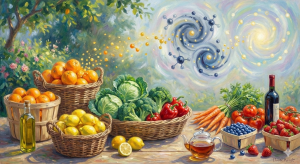
Thus, to sum up, we can say that, as with any health-related issue, the use of antioxidants should be approached with caution. Plant products containing a wide range of natural antioxidants — vegetable oils, tea, red wine, citrus fruits, types of cabbage (e.g., white cabbage, broccoli), sweet peppers, carrots, tomatoes, blueberries, strawberries, other vegetables, fruits, and berries — will adequately support the body’s defenses in various, including balanced, diets, helping to maintain health, performance, and energy under high intellectual, psycho-emotional, and environmental stress. It is the diversity of natural forms of antioxidants and their pharmacological and biological effects that can play a decisive role in reducing the risk of developing cancer, cardiovascular diseases, Alzheimer’s and Parkinson’s diseases mentioned above, arthritis, diabetes, as well as delaying aging.
And remember Paracelsus’s phrase: “Everything is poison, and nothing is without poison; only the dose makes the poison imperceptible” (in popular terms: “Everything is poison and everything is medicine; both are determined by the dose”).
Literature
Baraboy V.A. Bioantioxidants. – Kiev: “Kniga Plus”, 2006. – 462 p.
Burlakova E.B., Kukhtina E.N., Khrapova N.G., Aristarkhova S.A. The relationship between the amount of natural antioxidants and the oxidizability of liver lipids in mice under normal conditions and when alpha-tocopherol is administered // Biochemistry. – 1982. – Vol. 47, No. 5. – P. 822-826.
Burlakova E.B., Khrapova N.G. Peroxidative oxidation of membrane lipids and natural antioxidants // Advances in Chemistry. – 1985. – Vol. 54, Issue 9. – P. 1540-1558.
Kolosova N.G., Fursova A.Zh., Trofimova N.A. Multidirectional effect of antioxidants on anxiety in Wistar and Oxys rats // Bulletin of Experimental Biology and Medicine. – 2006. – No. 6. – P. 685-688.
Albanes D., Heinonen O.P., Taylor P.R., Virtamo J., Edwards B.K., Rautalahti M., Hartman A.M., Palmgren J., Freedman L.S., Haapakoski J., Barrett M.J., Pietinen P., Malila N., Tala E., Liippo K., Salomaa E.R., Tangrea J.A., Teppo L., Askin F.B., Taskinen E., Erozan Y., Greenwald P., Huttunen J.K. Alpha-Tocopherol and beta-carotene supplements and lung cancer incidence in the alpha-tocopherol, beta-carotene cancer prevention study: effects of base-line characteristics and study compliance // J. Natl. Cancer Inst. – 1996. – Vol.88, № 21. – P.1560-1570.
Azzi A., Breyer I., Feher M., Pastori M., Ricciarelli R., Spycher S., Staffieri M., Stocker A., Zimmer S., Zingg J.M. Specific cellular responses to alpha-tocopherol // J. Nutr. – 2000a. – Vol.130, No. 7. – P.1649-1652.
Azzi A., Stocker A. Vitamin E: non-antioxidant roles // Prog. Lipid Res. – 2000b. – Vol.39, No. 3. – P.231-255.
Bast A., Haenen G.R.M.M. The toxicity of antioxidants and their metabolites // Environmental Toxicology and Pharmacology. – 2002. – Vol.11. – P.251–258.
De Stefani E., Brennan P., Boffetta P., Ronco A.L., Mendilaharsu M., Deneo-Pellegrini H. Vegetables, fruits, related dietary antioxidants, and risk of squamous cell carcinoma of the esophagus: a case-control study in Uruguay // Nutr. Cancer. – 2000. – Vol. 38, No. 1. – P. 23–29.
Erdman J.W. Jr., Russell R.M., Rock C.L., Barua A.B., Bowen P.E., Burri B.J., Curran-Celentano J., Furr H., Mayne S.T., Stacewicz-Sapuntzakis M. // beta-Carotene and the carotenoids: beyond the intervention trials // Nutr. Rev. – 1996. – Vol.54, No. 6. – P.185-188.
Halliwell B. The antioxidant paradox // Lancet. – 2000. – Vol.355, No. 9210. – P.1179-1180.
Hendrickx A.G., Peterson P., Hartmann D., Hummler H. Vitamin A teratogenicity and risk assessment in the macaque retinoid model // Reprod. Toxicol. – 2000. – Vol.14, No. 4. – P.311-323.
Jyonouchi H., Sun S., Iijima K., Gross M.D. Antitumor activity of astaxanthin and its mode of action // Nutr. Cancer. – 2000. – Vol.36, No. 1. – P.59-65.
Omenn G.S., Goodman G.E., Thornquist M.D., Balmes J., Cullen M.R., Glass A., Keogh J.P., Meyskens F.L. Jr., Valanis B., Williams J.H. Jr., Barnhart S., Cherniack M.G., Brodkin C.A., Hammar S. Risk factors for lung cancer and for intervention effects in CARET, the Beta-Carotene and Retinol Efficacy Trial // J. Natl. Cancer Inst. – 1996. – Vol.88, No. 21. – P.1550-1559.
Osiecki M., Ghanavi P., Atkinson K., Nielsen L.K., Doran M.R. The ascorbic acid paradox // Biochem. Biophys. Res. Commun. – 2010. – Vol.400, No. 4. – P.466-470.
Rohde C.M., Manatt M., Clagett-Dame M., DeLuca H.F. Vitamin A antagonizes the action of vitamin D in rats // J. Nutr. – 1999. – Vol.129, No. 12. – P.2246-2250.
Toba T., Shidoji Y., Fujii J., Moriwaki H., Muto Y., Suzuki T., Ohishi N., Yagi K. Growth suppression and induction of heat-shock protein-70 by 9-cis beta-carotene in cervical dysplasia-derived cells // Life Sci. – 1997. – Vol. 61, No. 8. – P. 839-845.
Wang X.-D., Russell R.M. Procarcinogenic and anticarcinogenic effects of b-carotene // Nutr. Rev. – 1999. – Vol. 57, Issue 9. – P. 263-272.