Can pregnant women consume mint?
Is mint safe for pregnant women?
Regular mint tea can cause miscarriage!
Very often, doctors recommend drinking mint tea for spasms and cramps, which are common during the first months of pregnancy. Mint is often perceived as a harmless plant and an effective antispasmodic that carries no risks. But…
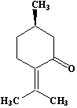
As American and Indian scientists have discovered, the monocyclic monoterpene ketone pulegone, found in mint essential oil, possesses hepatotoxic, neurotoxic, and abortifacient effects.
Fortunately, there is only a small amount of pulegone (0.1–7.5%) in the essential oil of Peppermint (Mentha piperita L.), which is the primary species used in cooking and medicine. Its main source, however, is the essential oil of Mentha pulegium L. (commonly known as Pennyroyal or fleabane mint), where the pulegone content reaches 75–90%.
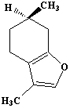
The increased toxicity of pulegone is due to its metabolic pathway: when ingested, it cyclizes into menthofuran in the gastrointestinal tract under the influence of enzymes. Menthofuran is a known hepatocarcinogen that can lead to liver necrosis and cause uterine bleeding.
 |
 |
| Pulegone (A key monoterpene ketone) |
Menthofuran (A specific furanoid compound) |
Scientific Note: Furthermore, toxicological risks are not limited to Mentha pulegium. Our recent studies conducted at the Department (Konovalova et al., 2025) on the chemical composition of Peppermint (Mentha piperita) essential oil during its introduction in the Kyiv region have shown that environmental factors can significantly influence the accumulation of specific components. In particular, we have identified peppermint chemotypes with an elevated content of pulegone, which emphasizes the necessity of rigorous phytochemical screening to ensure the safety of herbal raw materials.
While a single use of mint in very small amounts (such as a weak cup of tea) is unlikely to trigger abortifacient or hepatotoxic effects, regular consumption (for instance, drinking mint tea three times a day for a week) poses a significant chronic toxicological risk.
Therefore, for expectant mothers, isn’t it better to refrain?
How to Distinguish Peppermint from Pennyroyal?
Visual guide and botanical differences

Mentha piperita
(Tall, upright)

Visual Comparison
(Two species separated by a path)

Mentha pulegium
(Low-growing, creeping)
| Feature | Pennyroyal (Mentha pulegium) | Peppermint (Mentha piperita) |
|---|---|---|
| Leaves | Smaller, more rounded or narrow-oval, with smooth or very fine teeth. Often gray-green. | Larger, ovate or lanceolate, with distinct serrated edges. Dark green, often with purple veins. |
| Stem / Growth | Creeping, low-growing, forming dense mats. Stems are usually green. | Upright growth, reaching up to 90 cm. Sturdy stems, often reddish or purple. |
| Flowers | Arranged in separate, distant whorls along the stem. Stamens protrude noticeably. | Dense terminal spikes (spikelets) at the top. Stamens usually do not protrude far. |
| Aroma | Strong, sharp, “chemical” or camphor-like due to high toxic pulegone content. | Classic, fresh menthol aroma with a strong cooling effect. |
Literature
- Konovalova O.Y., Hurtovenko I.O., Moskalenko V.R. Study of the chemical composition of peppermint essential oil during introduction in Kyiv // Collection of abstracts of the Reporting Scientific and Practical Conference of Students (May 16, 2025, Kyiv). – Kyiv. – P. 50-51.
- Gordon W.P., et al. The metabolism of the abortifacient terpene, (R)-(+)-pulegone, to a proximate toxin, menthofuran // Drug Metab. Dispos. – 1987.
- Khojasteh-Bakht S.C., et al. Metabolism of (R)-(+)-pulegone and (R)-(+)-menthofuran by human liver cytochrome P-450s // Drug Metab. Dispos. – 1999.
- Madyastha K.M., Gaikwad N.W. Metabolic fate of S-(-)-pulegone in rat // Xenobiotica. – 1998.
- Nair B. Final report on the safety assessment of Mentha Piperita (Peppermint) Oil // Int. J. Toxicol. – 2001.