Chanterelles (Cantharellus cibarius)

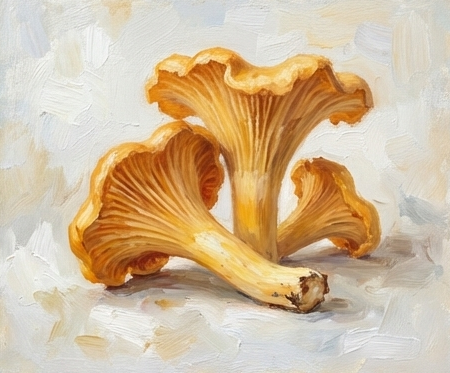

Distribution and ecology: Chanterelles are mycorrhizal fungi that most often form symbiosis with pine, spruce or oak. Chanterelles usually grow in large groups in mossy forests. In Ukraine, they are found in large numbers in Polesie and the Carpathians. A unique feature is that chanterelles are almost never affected by insect larvae (“worms”). This is due to the content of a special polysaccharide – chitinmannose, which is a natural insecticide and anthelmintic.
Cultivation possibilities: Due to the complex mycorrhizal connection with trees, chanterelles are practically not amenable to artificial industrial cultivation. The main source of raw materials remains wild collection in ecologically clean regions.
Basic information about the chemical composition
The polysaccharide fraction of chanterelles contains a specific compound known as quinomannose (often referred to as chitin-mannose), which is chemically classified as a fucosylated oligomannosidic N-glycan. Quinomannose exhibits anthelmintic properties by disrupting the neuroreceptors of parasites and degrading their ova, thereby facilitating the elimination of helminthic infestations from the gastrointestinal tract.
Chanterelles are also notable for their phytosterol content (58.2% DV per 100 g), primarily ergosterol (75.0%). This sterol modulates hepatic enzymes, promotes liver detoxification, and supports the maintenance of normal hepatic function.
The total purine base content per 100 g constitutes 10.0% of the daily allowance.
The oxalic acid concentration in chanterelles is low: 2.8% of the daily allowance per 100 g (11 mg, consisting of 5.5 mg of water-soluble oxalates and 5.5 mg of insoluble forms).
A significant pharmacological discovery regarding chanterelles was published in 2012 by a team of Korean researchers (see full reference at Your Healthy Diet). They isolated specific acetylenic fatty acids from the fruiting bodies: (10E,14Z)-9-oxo-octadeca-10,14-dienoic acid and (10E,14Z)-9-hydroxy-octadeca-10,14-dienoic acid. These compounds act as ligands for the peroxisome proliferator-activated receptor gamma (PPAR-γ) in the cell nucleus. PPAR-γ regulates the expression of genes involved in adipocyte differentiation as well as lipid and carbohydrate metabolism. The activation of PPAR-γ modulates the gene encoding leptin (the “satiety hormone”). Consequently, the acetylenic fatty acids found in chanterelles potentially exert therapeutic effects on diabetes mellitus and may facilitate lipid catabolism (“fat burning”) in the human body.
⚠️ Attention, Poisonous Doppelgangers!
The Main Doppelganger: False chanterelle (Hygrophoropsis aurantiaca).
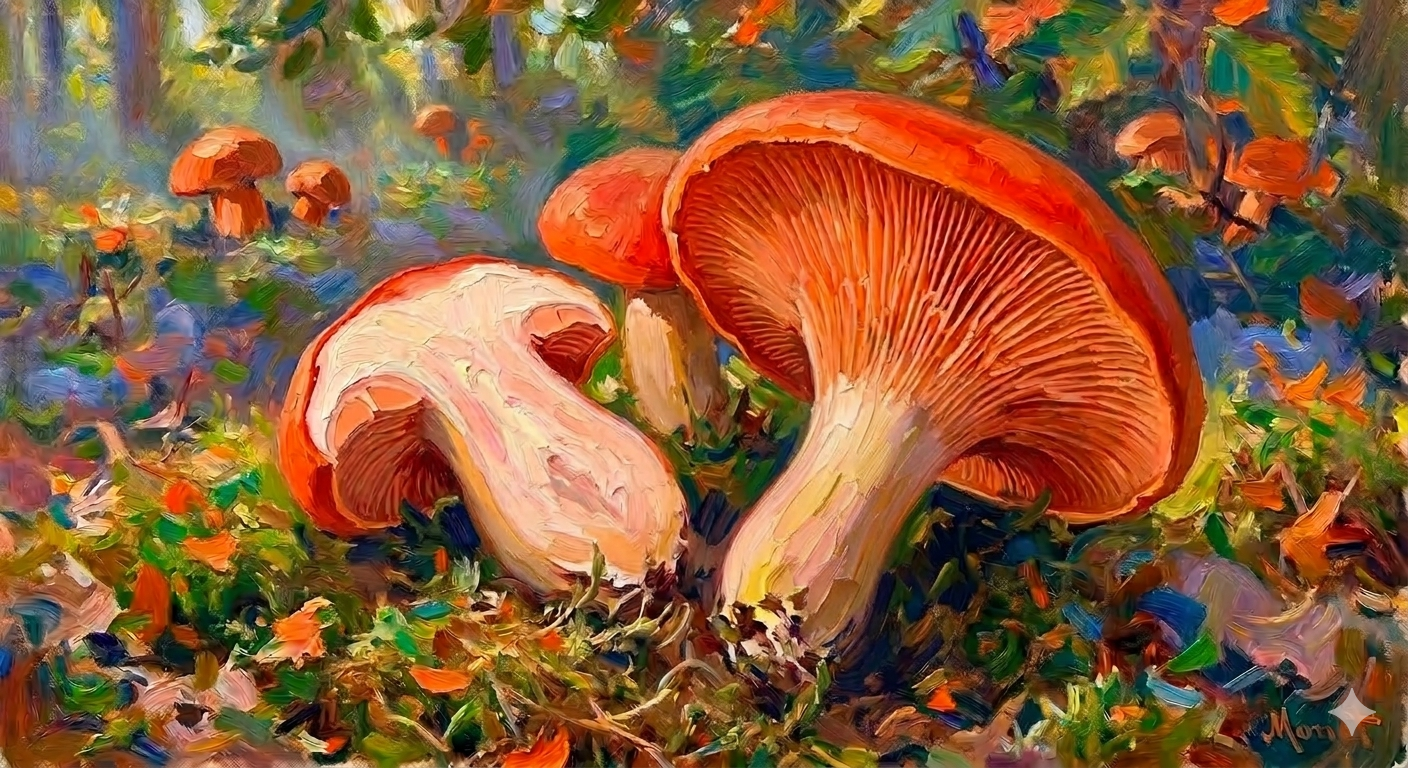
What makes it different:
Color change: The real chanterelle has a calm egg-yellow color. The fake one is bright orange or reddish-orange.
Plates: In a true chanterelle, these are thick folds that have grown together with the stem. In a false chanterelle, these are thin, frequent plates that are clearly separated from the stem.
Edge shape: In a true chanterelle, the edges of the cap are always wavy, torn, and irregularly shaped. In a false chanterelle, the edges are smooth and rounded.
|
Poisonous Doppelganger |
Toxin type / Syndrome |
First Aid and Antidote |
|---|---|---|
|
False chanterelle (Hygrophoropsis aurantiaca) |
Contains mildly toxic substances, causes gastroenteritis
|
There are no specific antidotes, therapy is symptomatic. Drinking plenty of fluids (rehydration), sorbents. Symptomatic therapy. |
If you have even 1% doubt about a mushroom, don’t put it in the basket!
CHANTERELLES
Water in 100 g: 88.5 g
Ash from 100 g: 1.0 g


* A full cup – 100% of the daily value; an empty cup – 0-1% of the daily value.


PURINE BASES
Standard cup: 250.0 g of Chanterelles
Faceted glass: 200.0 g of Chanterelles
Teaspoon: 7.0 g of Chanterelles
Tablespoon: 20.0 g of Chanterelles