Konovalova Olena, personal website
Dear and esteemed friends – visitors of my website dedicated to pharmacognosy!
For many years, this site existed in a Russian-speaking version, as from the very beginning of its creation (back in 2005!) it was conceived as a source of useful and interesting pharmacognostic information for Russian-speaking users from all over the world. And so it turned out – the site was visited by readers from more than 150 countries around the world.
On February 24, 2022, due to the barbaric, unprovoked, treacherous aggression of Russia against my native country – Ukraine – I decided to temporarily close the site and subsequently completely cease its existence in the Russian-speaking version.
Now I am actively working on modernizing the site, updating the design, and improving navigation. All for your convenience, my dear readers!
The site will exist in two versions – Ukrainian and English. The translation of the pages and the reorganization of the site will, of course, take some time. The road is long and difficult. But it is worth it!
Today, September 5, 2022, due to numerous requests from users of the site from all over the world, I am reopening the site for public access. Unfortunately, there is no possibility to open only the translated pages of the site (the principle of “all or nothing” applies here), so for now, a large part of the pages will remain in Russian. But as the translation progresses, the site will be updated and will initially become fully Ukrainian, and later – bilingual (Ukrainian and English). Both the appearance and the content of the site will change, new interesting pages will appear, and video materials will be added.
I hope, dear fans and just visitors of the site, you will understand everything and wait a little for the full Ukrainian version of the site.
And one more thing: during the reorganization of the site, the “Contacts” page will not operate in the usual mode, as there is currently no time or opportunity for communication. I ask you to understand this.
I wish everyone health, a harmonious state of mind (as much as is possible now), happiness, peace, and the Great Victory of Ukraine!
Sincerely yours – the author of the site, Prof. Konovalova Olena Yuriyivna

Exciting and informative – about pharmacognosy
Could you have thought that under certain conditions…
- echinacea causes infertility;
- mint provokes abortion;
- grapefruit is a risk factor for cancer;
- garlic may be the cause of impotence;
- . . .
If you are interested in the truth about the medicinal properties of plants, then you are at the right address.
Unfortunately, the great interest in medicinal plants has spawned an avalanche of not very high-quality publications, in which sometimes unverified, superficial, erroneous information is disseminated, flavored with incompetent comments from the authors – simply put, banality and myths. We want to oppose amateurism with a scientific approach.
The properties of medicinal plants known since ancient times are here correlated with the latest literary data and “fresh” systematic research from leading global scientific centers. The data we rely on is often known to a very narrow circle of scientists specializing in their field. On this site, you will find an independent expert assessment based on the study of a significant array of scientific literature sources, summarized in a series of original articles (the section “Mysteries of Plants”), in particular, you will learn about the possible consequences of using certain medicinal and food plants, for example, the well-known immune stimulant – purple echinacea, a spasmolytic – peppermint, a tasty fruit “for weight loss” – grapefruit, “plant meat” – soy, a favorite “culinary anabolic” for many – garlic.
Here you will also:
– discover the mysterious plant world and understand how much we have in common with plants;
– get to know pharmacognosy better – the science of medicinal plants (as well as fungi and animals) as potential raw materials for creating medicinal products. More about pharmacognosy… ;
– receive answers to many pressing questions (for example, why does early gray hair appear; how to prevent senile dementia; what do white spots on nails indicate; how to maintain male health, etc.);
– be able to determine your biological (not calendar) age ;
– get acquainted with many methods of body cleansing;
– graduate students and those seeking academic degrees will find useful links to chemical, pharmaceutical, medical, biological databases;
– students will learn to easily memorize even the most complex formulas.
For those who are deeply interested in pharmacognosy, it will be interesting to look into the faces of the people who created and developed this science over the centuries, passing the baton to each other; to learn what they lived for, what they were like… The history of pharmacognosy in faces
Specialists will be able to familiarize themselves with the new concept of modern pharmacognosy and the new classification of natural compounds, developed by Prof. Konovalova O.Yu., some of her scientific publications (monographs, articles, patents), textbooks and methodological developments.
For doctoral candidates, graduate students, and enthusiastic students, there are useful links to pharmaceutical, chemical, medical, and biological databases.
Especially for students, the site contains sections that help to learn the formulas of substances without tension (not only from the pharmacognosy course but also from the course of the related and very complex science – pharmaceutical chemistry), as well as textbooks on pharmacognosy.
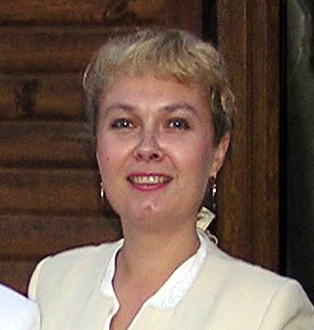
The author of the site – Professor Konovalova Olena Yuriyivna, Doctor of Pharmaceutical Sciences, Head of the Department of Pharmaceutical and Biological Chemistry, Pharmacognosy at Kyiv Medical University.
On this site, we will introduce you to the novelties and traditions of the world of pharmacognosy and phytochemistry. We hope that here you will learn a lot of useful information and be able to make the right conclusions in time.
Always happy to help you!